

Flow measurement for liquids, gases and steam
Product overview and all you need to know about flow measurement in industrial processes



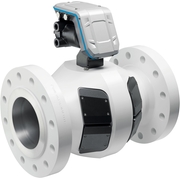
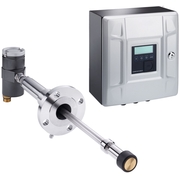
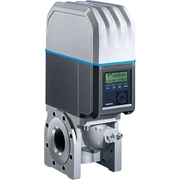
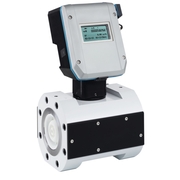
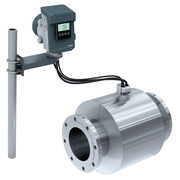

%20with%20flange%20connections%20for%20process%20applications%20-%20PP01.jpg "Picture of Electromagnetic flowmeter Proline Promag P 300 / 5P3B for process applications")
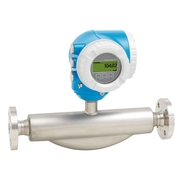

About flow measurement for liquids, gases and steam
Consistent product quality, safety, process optimization and environmental protection – these are only a few reasons why industrial flow measurement is an important element of process control. Water, gas, steam, mineral oil and chemicals are some of the fluids that must be measured day in, day out. You can choose the flowmeter best suited to your process needs from our comprehensive product basket. On this page, we provide an overview of the measuring principles behind our industrial flowmeters and where these are applied. We also show how smart measuring technology and multivariable sensors unlock additional value. Drawing on decades of expertise, Endress+Hauser offers one of the broadest portfolios of flow measuring devices, combining technological depth with industry-specific know-how.
Benefits
- Flow measurement supports process control: From the communication-capable single measuring point to the complete solution for higher-level control systems – Endress+Hauser flowmeters are tailored to our customers’ requirements.
- Together with automated process control and state-of-the-art communication interfaces (fieldbus systems), flow metering has advanced into increasingly new fields of application in recent years.
- You can choose among various measuring principles – mass flow based on either the Coriolis or thermal principle, measurement of volume flow based on the electromagnetic, vortex or ultrasonic principle.
- Our portfolio ranges from basic flowmeters for basic applications to multivariable and smart flow measurement instrumentation for demanding applications, from very small devices for pipe diameters of 1 millimeter to very large devices for pipes of up to 4 meters, thus offering solutions for almost any application, be it in industries like Life Sciences, Oil and Gas, Water and Wastewater or Power and Energy.
Why is flow measurement important in industrial processes?
Accurate flow measurement allows operators to control their processes more precisely. Knowing the exact flow rate of fluids, i.e. liquids, gases or steam, enables users to create and maintain optimal operating conditions, improve the efficiency of the plant and maintain or even improve product quality.
Besides process control and plant efficiency, safe operating conditions are another area where flow measurement plays an important role, as deviations in flow often indicate process errors or material failure. Incorrect flow rates can lead to safety risks in certain industries like chemical manufacturing, oil and gas or pharmaceuticals. For example, leaks of aggressive and potentially explosive fluids can be foreseen or even prevented with accurate flow measuring equipment.
Many industries are subject to strict environmental, safety and custody transfer measurement regulations. Flow measurement is useful for monitoring emissions, waste discharge or resource usage and thus enables plant operators to comply with legal standards.
How is flow measured – the different flow measuring technologies
There are several flow measurement technologies, each suited to different types of fluids, process conditions and accuracy requirements. Their fields of application range from cryogenic liquids to water flow measurement to gas and steam flow measurement.
Coriolis measuring principle
The Coriolis measuring principle determines mass flow by utilizing the Coriolis force. Inside the flowmeter, an exciter causes one or more measuring tubes to oscillate. When fluid flows through these tubes, its inertia adds further twisting to the oscillation. Two sensors detect this change as a phase difference, which directly correlates to the mass flow. Read more about the measuring principle here.
Coriolis sensors are highly versatile and suitable for liquids and gases. Due to their exceptional accuracy, Coriolis flow meters are ideal for custody transfer applications across industries such as life sciences, chemicals, petrochemicals, oil and gas and food processing.
Coriolis flow measurement products by Endress+Hauser
The range of Coriolis flow measurement products is very broad, covering all industry requirements. With Proline Promass, Endress+Hauser offers multivariable Coriolis sensors of the highest accuracy which are ideally suited to measure mass flow, density and viscosity for a wide range of process fluids. The portfolio includes flowmeters ...
- ... for very small flow rates as well as high flow rates.
- ... specialized for hygienic applications.
- ... for viscous liquids like honey, yoghurt or bitumen.
- ... for different types of gas, such as hydrogen or carbon dioxide.
The sensors are highly robust, some especially suited for challenging fluids like corrosive acids, liquefied carbon dioxide or cryogenic fluids such as liquified natural gas (LNG). Even single-use applications in the biotech industry can be served with the highest measuring performance. Another very important field is custody transfer measurement, for example, applications like crude oil transport or loading/offloading skids of refined hydrocarbons and milk delivery.
Customer success stories with Coriolis flowmeters


Highest measuring accuracy when discharging bitumen
Read how Grisard Bitumen AG relies on Coriolis flowmeter Promass Q with unique 4-tube technology.
Inline monitoring of ketchup quality and teamwork pays off
Read how a ketchup producer can continuously control the quality during production, save time waiting for lab results and avoid product losses and reduce unplanned costs thanks to inline viscosity measurement.
Reducing metering errors and maintenance costs significantly
Read how Arkema replaced volume flowmeters which reached unacceptable levels of maintenance costs and metering errors with mass flowmeters.


Highest measuring accuracy when discharging bitumen
Read how Grisard Bitumen AG relies on Coriolis flowmeter Promass Q with unique 4-tube technology.

Inline monitoring of ketchup quality and teamwork pays off
Read how a ketchup producer can continuously control the quality during production, save time waiting for lab results and avoid product losses and reduce unplanned costs thanks to inline viscosity measurement.

Reducing metering errors and maintenance costs significantly
Read how Arkema replaced volume flowmeters which reached unacceptable levels of maintenance costs and metering errors with mass flowmeters.


Electromagnetic measuring principle
The basis of the electromagnetic measuring principle is Faraday’s law of induction, which states that a metal rod moving in a magnetic field induces electrical voltage. In electromagnetic flowmeters (magnetic inductive), two field coils generate an artificial magnetic field. As soon as the electrically charged particles in a fluid cross this field, an electric voltage is induced and measured by electrodes. The electric voltage is directly proportional to the velocity of the fluid and thus to the flow volume. Read more about the measuring principle here.
Electromagnetic flow measurement devices, also known as magmeters, are insensitive to pressure, temperature, density or viscosity and can thus be used to measure all electrically conductive liquids above 5 μS/cm with or without entrained solids. The measuring instruments are suitable for tasks like measuring and monitoring continuous flow rates, filling and dosing. Typical applications are water management, but also applications in food and beverages as well as life sciences, chemical processing and in demanding environments like mining or tunnel construction with abrasive slurries.
Electromagnetic flow measurement products by Endress+Hauser
The Proline Promag product family is universally applicable in all industries and in pipes with diameters from 2 millimeters to 3 meters. The electromagnetic measuring instruments offer high accuracy in water and wastewater applications, but also in process applications with high temperatures and hygienic applications, even with limited installation space. One device is dedicated to remote areas without external power supply. Several devices are suitable for installation downstream of obstacles in the pipeline while delivering precise measurement or for custody transfer measurement. Magmeters are very robust and contain no moving parts or constrictions which could lead to pressure loss. Additionally, they only require minimal maintenance.
Customer success stories with electromagnetic flowmeters

.jpg)

Measuring technology for sustainable power network expansion
Read how Hölscher Wasserbau extracts, treats and reintroduces groundwater sustainably during the construction of the A-Nord high-voltage DC power line, while adhering to environmental regulations.
Reliable measurement in electrolysis applications
Read how Westlake Vinnolit uses chlor-alkali electrolysis to produce chlorine, caustic soda and hydrogen, relying on Promag Proline P 300/500 as an accurate flowmeter that is immune to electrical interference.
City of Pendleton uses flowmeter at wastewater facility
Read how the City of Pendleton, Oregon utilizes the Promag W full-bore unrestricted mounting 0 x DN flowmeter for improved measurement at their twastewater facility.

Measuring technology for sustainable power network expansion
Read how Hölscher Wasserbau extracts, treats and reintroduces groundwater sustainably during the construction of the A-Nord high-voltage DC power line, while adhering to environmental regulations.
.jpg)
Reliable measurement in electrolysis applications
Read how Westlake Vinnolit uses chlor-alkali electrolysis to produce chlorine, caustic soda and hydrogen, relying on Promag Proline P 300/500 as an accurate flowmeter that is immune to electrical interference.

City of Pendleton uses flowmeter at wastewater facility
Read how the City of Pendleton, Oregon utilizes the Promag W full-bore unrestricted mounting 0 x DN flowmeter for improved measurement at their twastewater facility.
Vortex measuring principle
The vortex measuring principle is based on the fact that vortices (von Kármán vortex street) are formed when a fluid passes a non-aerodynamic obstacle (bluff body) in the flow, for example after a bridge pier. Inside the sensor of vortex flowmeters a bluff body is located in the middle of the pipe. After this obstruction, vortices form when the fluid reaches a certain velocity. The frequency of vortex shedding is directly proportional to the mean fluid velocity and thus to the volume flow. A capacitive sensor detects the alternating pressure on both sides of the bluff body. Read more about the measuring principle here.
Vortex sensors are universally applicable for liquid, gas and steam flow measurement, being especially reliable for chemical, petrochemical, power and heat supply applications with harsh conditions, as they are largely unaffected by changes in pressure, density, temperature and viscosity. Typical applications include saturated or superheated steam, industrial gases like compressed air, nitrogen, hydrogen, carbon dioxide, liquefied gases (cryogenics), carbon dioxide and liquids, for example fully demineralized water, solvents, heat-transfer oils, boiler feedwater or condensate.
Vortex flow measurement products by Endress+Hauser
The multivariable vortex flowmeters by Endress+Hauser, Proline Prowirl flowmeters, offer simultaneous measurements of mass flow, corrected volume flow, energy flow (e.g., delta heat), temperature and even process pressure. In addition, the same product can be used in gas, steam or liquid applications. This product family is known for its robustness while delivering precise measured values even under toughest conditions. Prowirl 200 is the world’s first vortex flowmeter with the option of monitoring the steam quality (dryness fraction) and thus enables more accurate balancing of steam plants in mass and energy terms. Other benefits are its high long-term stability thanks to no zero-point drift and a lifetime K-factor, and with careful sizing, a good turndown can be reached.
Thermal measuring principle
The thermal flow measuring principle relies on convective heat transfer for measuring the mass flow of gases. When gas flows past a heated surface, it strips away heat causing a forced cooling of the surface. A thermal flowmeter utilizes this effect for measuring the flow rate. The sensor of a thermal mass flowmeter consists normally of two temperature elements. One measures the temperature of the gas, while the other can either heat itself or measure its own temperature. The heated element maintains a constant elevated temperature difference to the gas temperature, with the electronics adjusting the power to changes in the flow. The power applied is a measure for the flow rate. Read more about the measuring principle here.
Thermal mass flowmeters are well suited for measuring consumption and monitoring the flow of industrial gases in a wide range of applications, especially where low flow rates and low pressures prevail. These applications include, but are not limited to, compressed air monitoring, natural gas consumption, carbon dioxide and nitrogen monitoring, process gas flow control, leakage detection and submetering in distribution networks.
Thermal flow measurement products by Endress+Hauser
Endress+Hauser’s brand of thermal mass flowmeters, Proline t-mass, stands out with its flexible programming of a large range of single gases or gas mixtures, exceptional performance over a wide measurement range, comprehensive diagnostic features, field verification of device functionality and monitoring of process stability. t-mass instruments have an exceptional turndown, negligible pressure loss, excellent low-flow sensitivity and require no pressure or temperature compensation. Combined, this results in higher process safety and measuring accuracy, lower opex and capex, high flexibility in operations and efficient energy and process optimization. The multivariable device can output mass flow, corrected volume flow, energy flow and temperature. Proline t-mass flowmeters are available as inline and insertion versions, the latter offering measurement in larger pipelines or rectangular ducts.
Ultrasonic measuring principle
The ultrasonic flow measuring principle is based on the fact that swimming against the flow requires more power and time than swimming with the flow. Accordingly, the measurement method is called differential transit time. It uses sensors positioned in, respectively on, the measuring tube which alternately transmit and receive ultrasonic signals and measure the signal transit time. As soon as the fluid in the tube starts to flow, these signals are accelerated in the direction of flow respectively delayed in the opposite direction. The time difference is directly proportional to flow rate. Read more about the measuring principle here.
Ultrasonic flowmeters can be used to measure liquids and gases regardless of conductivity, pressure or viscosity. They are perfect for flow monitoring, network balancing and verification tasks where flexibility and cost-effectiveness are key. Moreover, they are ideal for demanding applications in the petrochemical, chemical and water industries. Examples are custody transfer applications, leakage detection, water distribution networks, energy measurement in heating/cooling cycles, petrochemical and refinery transfer lines or industrial process engineering.
Ultrasonic flow measurement products by Endress+Hauser
Ultrasonic flowmeters of the Proline Prosonic Flow and the FLOWSIC family by Endress+Hauser are available as sensors for inline and for noninvasive flow measurements. Inline flowmeters provide guaranteed accuracy in demanding applications in the petrochemical, chemical and water industries. Clamp-on sensors are the perfect solution for short-term installation or even permanent measurements, e.g., for retrofitting without process interruption, aggressive, hazardous and toxic fluids, high process pressures and temperatures or very large pipes up to 4 meters.
Thanks to the advanced feature FlowDC, inlet runs can be reduced significantly, thus making installations in tight spaces possible. Further benefits include zero pressure loss, minimal maintenance and a long service life.
Customer success stories with ultrasonic flowmeters


Reliable flow measurement despite difficult conditions
Read how Schluchseewerk AG found the optimum solution to record and optimize the efficiency of its turbines at the pumped storage plant in Wehr in Endress+Hauser's ultrasonic clamp-on flowmeter.
Increase in energy efficiency of plant heating system
Discover how the chemical company Indorama Ventures achieved stable and noninvasive flow measurement of thermal oil thanks to the noninvasive high-temperature sensors of Proline Prosonic Flow P 500 from Endress+Hauser.
Inline gas ultrasonic flowmeter improves company's process

Reliable flow measurement despite difficult conditions
Read how Schluchseewerk AG found the optimum solution to record and optimize the efficiency of its turbines at the pumped storage plant in Wehr in Endress+Hauser's ultrasonic clamp-on flowmeter.

Increase in energy efficiency of plant heating system
Discover how the chemical company Indorama Ventures achieved stable and noninvasive flow measurement of thermal oil thanks to the noninvasive high-temperature sensors of Proline Prosonic Flow P 500 from Endress+Hauser.

Inline gas ultrasonic flowmeter improves company's process
What are the benefits of multivariable flowmeters?
Multivariable flowmeters give more insight into processes with fewer devices. This helps operators save costs and improve process efficiency.
Endress+Hauser's multivariable flowmeters measure several process variables simultaneously, offering significant advantages for industrial applications. For example, real-time data on multiple parameters allow better process control and diagnostics. This helps plant operators to optimize their processes, from exact dosing to batching, leakage detection and energy usage, to name just a few use cases. Another benefit is that one device replaces multiple sensors for each parameter, which reduces capex, simplifies installation and decreases maintenance costs.
Which multivariable flowmeters does Endress+Hauser offer?
The devices of the Coriolis-based Promass family are particularly known for their multi-variability. These flowmeters are designed to measure not just flow rate, but also mass flow, density, temperature and even viscosity. Thus, not only do Coriolis flowmeters determine the highest possible accuracy regarding quantitative flow information; they also provide valuable qualitative information regarding the process fluid. This additional information is useful for custody transfer measurement, concentration measurement, process and quality control and direct calculation of balances. Electromagnetic flowmeters of the Promag family can also integrate measurements of various parameters in one single device, namely volumetric flow, conductivity and temperature. These are ideal for water or wastewater applications, utilities, quality monitoring and energy applications. Vortex flowmeters of the Prowirl family offer simultaneous measurement of volume flow, temperature and pressure. These measurements allow precise compensation of gas corrected volume and energy, steam mass, energy, delta heat and even dryness fraction. Our customers thus achieve highest efficiency in utilities and energy management.
Visit the single products to learn more about the parameters they measure and the benefits this offers.
When does a flowmeter become smart?
A smart flowmeter is one that has transformed from a simple measuring device into a strategic asset for process optimization, predictive maintenance and seamless integration into upper layer systems, essential elements in an increasingly digital world. Endress+Hauser enables this transformation through innovations like Heartbeat Technology, advanced diagnostics and a wide variety of connectivity options across the flowmeter portfolio.
Smart instrumentation through Heartbeat Technology
Heartbeat Technology of Endress+Hauser is key for smart instrumentation. Its diagnostics, verification and monitoring functions give in-depth process and device insights, enabling process optimization and condition monitoring. Traceable verification, confidence in device functionality, legal compliance, predictive maintenance and extended calibration intervals are just a few of the many advantages Heartbeat Technology offers.
Buildup index with Proline Promag
Operators of water treatment plants often face unexpected downtime due to buildup clogging their pipes. The patented buildup index integrated into Heartbeat Technology offers permanent monitoring of build-up for trend analysis with electromagnetic flowmeters. Thus, condition-based maintenance, optimization of cleaning cycles along with reduced costs and fewer unexpected downtimes are possible to achieve. This results in higher plant availability and reliability in the processes.
HBSI – increased confidence in sensor integrity
The HBSI value of Heartbeat Technology enables monitoring of potential changes in the electromagnetic field strength of magmeters. Thanks to this functionality, plant operators can detect magnetic interferences and their influence on the measuring accuracy of Proline Promag devices.
FlowDC with Proline Prosonic Flow for consistent measuring performance after fittings
The FlowDC function by Endress+Hauser guarantees specified measuring performance of ultrasonic flowmeters even downstream of turbulence-generating fittings. This means that operators have maximum flexibility in limited spaces as inlet runs can be significantly reduced and the instruments can be installed downstream of obstacles like bends or pipe reducers.
Solutions for seamless integration, plant control and data handling
Innovative and proven connectivity solution for integration into plant control
Seamless integration into existing plant control systems is crucial for efficient operation and monitoring. Endress+Hauser provides innovative connectivity solutions that ensure reliable data transmission and compatibility with a wide range of control platforms. This allows for straightforward implementation, real-time data access and enhanced process transparency, ultimately supporting smarter decision-making and streamlined plant operations.
State-of-the-art Ethernet connectivity and innovative Single Pair Ethernet with APL and SPE allow for efficient and easy integration into PLC (Process Logical Controller) and DCS (Distributed Control System) environments. 4–20mA and IO-Link are proven-in-use technologies and stand for simple integration into I/O systems or IO-Link managers.
SmartBlue – Efficient wireless operation of devices
Setting up a device or doing commissioning is now available at your fingertips. Performing routine tasks in engineering, operation and maintenance with the SmartBlue app has never been easier and can now be accomplished with no special tooling equipment but a mobile device.
In addition, SmartBlue sets new security levels in the field. Independent tests of the Fraunhofer-Gesellschaft have confirmed superior security mechanisms, thus protecting the device from unauthorized access.
Aligned concentration readings in the process vs. labs with Sample and Adjust
Product quality control is essential in the food and beverage industry. Currently, the lab-to-field shift means that users transition from laboratory-based analysis to reliable inline concentration measurement and thus, continuous quality monitoring with Coriolis flowmeters. The Sample and Adjust app of Endress+Hauser enables users to align the concentration readings of the instrument with validated laboratory reference values obtained by manual sampling and lab analysis. The app provides an easy and intuitive step-by-step guide from sampling to adjustment of Promass concentration readings.
IIoT ecosystem Netilion
Netilion is a cloud-based IIoT ecosystem supporting various brands of equipment. Data in the physical plant is made available digitally and thus provides actionable information to users. Netilion enables digitization and optimization of industrial processes from anywhere and at any time. The platform meets internationally recognized standards of cloud-platform security. It offers several tailored services like Netilion Value, Netilion Analytics or Netilion Inventory.
Frequently asked question about flow measurement

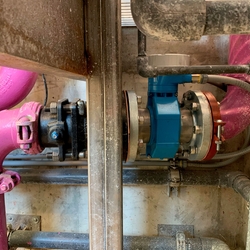
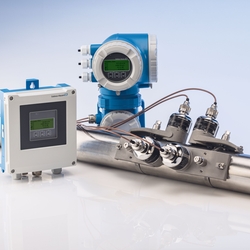

Downloads
Explore additional resources

Proline in industries - the ideal device for each industry
eBook: Check out the benefits of the new Proline, have look at our industry-optimized product portfolio, and profit from additional information such as films and a download function for brochures.

Flow measuring technologies for liquids, gases and steam
Products and services of our flow measuring technologies for liquids, gases and steam at a glance

